Choices in Sister Other Paranoia
Which prompts matter, which are flavor, and how to save around the four ending gates.
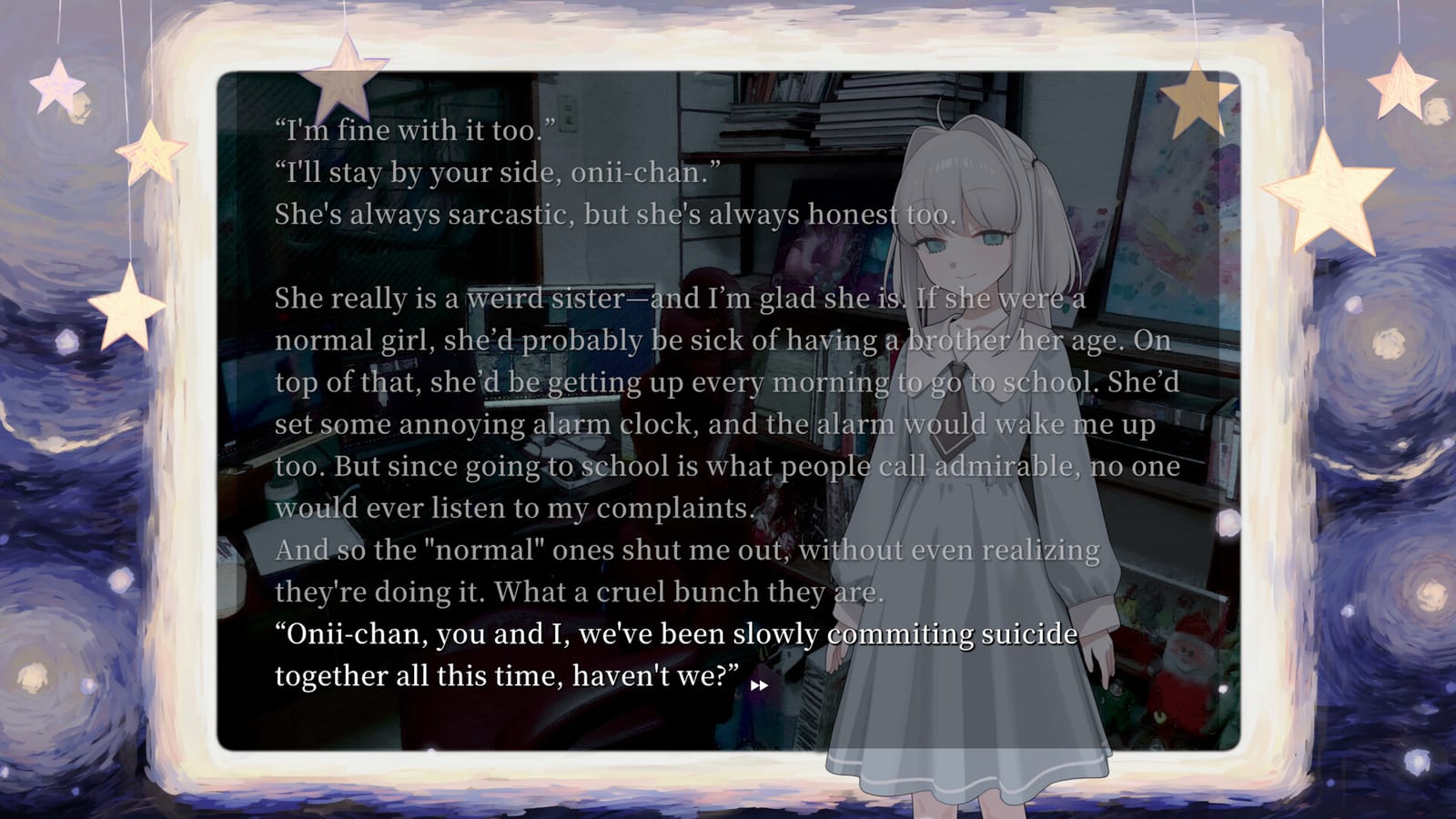
Choice without a fake flowchart
Players search for “Sister Other Paranoia choices” because psychological visual novels often hinge on irreversible decisions. That instinct is fair. What is not fair is inventing extra route names or affection thresholds beyond the five motifs and four endings already documented after launch.
This page separates confirmed narrative stakes from unknown branching structure, then offers save habits that remain useful whether the shipping game is lightly branching or densely forked. Pair it with How to Play, Mind Reading, and Controls. The Gameplay Hub remains the category home.
What is confirmed about agency
Official materials emphasize decisions of character and morality more than UI screenshots of choice boxes:
- The protagonist can lean into mind reading as a way to punish people who wound him.
- The story foregrounds unhealthy codependency with his sister as the remaining comfort.
- Four endings sit on top of a five-motif board. Most dialogue lines do not change those gates—see Walkthrough and Routes.
- The experience is framed as witnessing that future “with your own eyes,” which is literary address to the player as much as a systems teaser.
None of that requires a public flow chart to be meaningful. It does mean you should treat dark prompts carefully when they appear.
What remains unconfirmed
Until manuals, developer posts, or a shipped build say otherwise, treat the following as unknown:
- Hidden variables or unnamed extra endings beyond the four documented gates
- Whether every mind-reading beat is selectable versus scripted
- Achievement-linked choice lists that have not been published
If you see a pre-release “100% guide” with confident ending names, be skeptical. This wiki will not compete in the fiction Olympics.
How to play choices when they appear
Read the full prompt
Full-screen novels sometimes format choices as short lines that look interchangeable. They rarely are. Read surrounding narration before you click. The hide-text control will not help mid-menu, so slow down earlier—see Controls.
Notice whose voice you are rewarding
A choice that sounds “strong” may simply be the protagonist’s contempt speaking. Sister Other Paranoia’s pitch thrives on ugly rationalizations. Selecting the savage option might be thematically coherent and still feel awful. That tension is part of play.
Do not outsource your first run blindly
Guides are great for cleanup runs. For a first pass through a denpa story, your unspoiled discomfort is content. Use this page for habits, not for a spoiler shopping list.
Save hygiene that works in almost every VN
Even without a published route map, good save practice costs nothing:
- Keep a rotating set of slots at chapter-like breaks or obvious scene transitions.
- Duplicate a slot before a clearly marked decision, especially anything involving harm, confession, or mind reading.
- Name saves with plain language if the UI allows (“before confrontation,” “after award talk”) instead of only timestamps.
- Avoid overwriting your earliest autosave until you know how generous the game is.
- After launch, screenshot the choice screen if you intend to write guides—future-you will thank present-you.
These habits matter twice as much in stories about suicide and mental crisis because you may want distance before reloading a scene.
Mind reading as a choice fantasy
Even if some mind-reading sequences are scripted, the marketing presents them as moments where you can strike. Mentally categorize them as high-agency scenes:
- Pause if you need air
- Remember content warnings from Getting Started
- Refuse to treat real-world people as NPCs afterward
Deep system discussion lives on Mind Reading. This page only insists that “choice” includes the choice to stop playing for the night.
Choices versus the Needy Streamer Overload mindset
Needy Streamer Overload trains some players to optimize meters and chase specific endings through systemic mastery. Sister Other Paranoia’s classic VN pitch suggests a different muscle: interpretive patience. You may still get multiple outcomes—many novels do—but prepping a spreadsheet on day zero misses the advertised vibe.
Read From Needy Streamer Overload if you need help resetting expectations. Use the demo to see how often the build actually stops to ask you anything.
Role-playing versus completionism
Two valid ways to engage:
- Role-play run: pick what the protagonist would do in his worst or most sincere voice; accept ugly consequences as story.
- Completionist run: after you understand the tone, hunt remaining scenes with saves and (post-launch) verified guides.
Neither is morally superior. Mixing them on a first run often creates regret—either spoilers or a flattened emotional arc. Pick a lane for chapter one.
Multiplayer myths and shared saves
There is no shared-session choice mode in the public pitch. The game is single-player. “Playing together” means watching on a couch or streaming while chat yells. If you co-watch, agree on content boundaries first; mind-reading scenes are not light party games. Streaming permissions are generous per Steam, but your audience’s consent still matters.
How this wiki will update after launch
Post-release, a responsible choices page usually gains:
- Spoiler sections behind clear labels
- Verified decision points with context
- Notes on missables
- Differences between demo and full game
It should never gain fanfiction endings. If we cannot verify a branch, we leave it blank.
Practical buying mindset
Choices content is a reason to buy with eyes open, not a reason to skip. The game is out on Steam as of August 14, 2026, with a $9.99 list price and an intro sale noted on Price. Use How to Buy for storefront steps and Walkthrough after one honest run.
Related pages
Play the decisions you can stand to remember. Leave the fake flowcharts to people who have not read the store page.
Frequently Asked Questions
Quick answers to the most common questions.
How many endings does Sister Other Paranoia have?
Four confirmed endings. Most dialogue choices do not change the outcome. See the Walkthrough for the named gates.
Should I save before decisions?
Yes. Even without a known route map, duplicating a save before major prompts is smart—especially around harm or mind-reading scenes.
Is the game kinetic with no choices?
Official materials stress moral and relational stakes but have not published a full branch map. Demo play and launch-day notes will clarify structure.
Where do I learn the basic play loop?
Start with How to Play and the Gameplay Hub.