Mind Reading in Sister Other Paranoia
Telepathy as pressure, ethics, and story fuel—not a spoiler route map.
The power at the center of the pitch
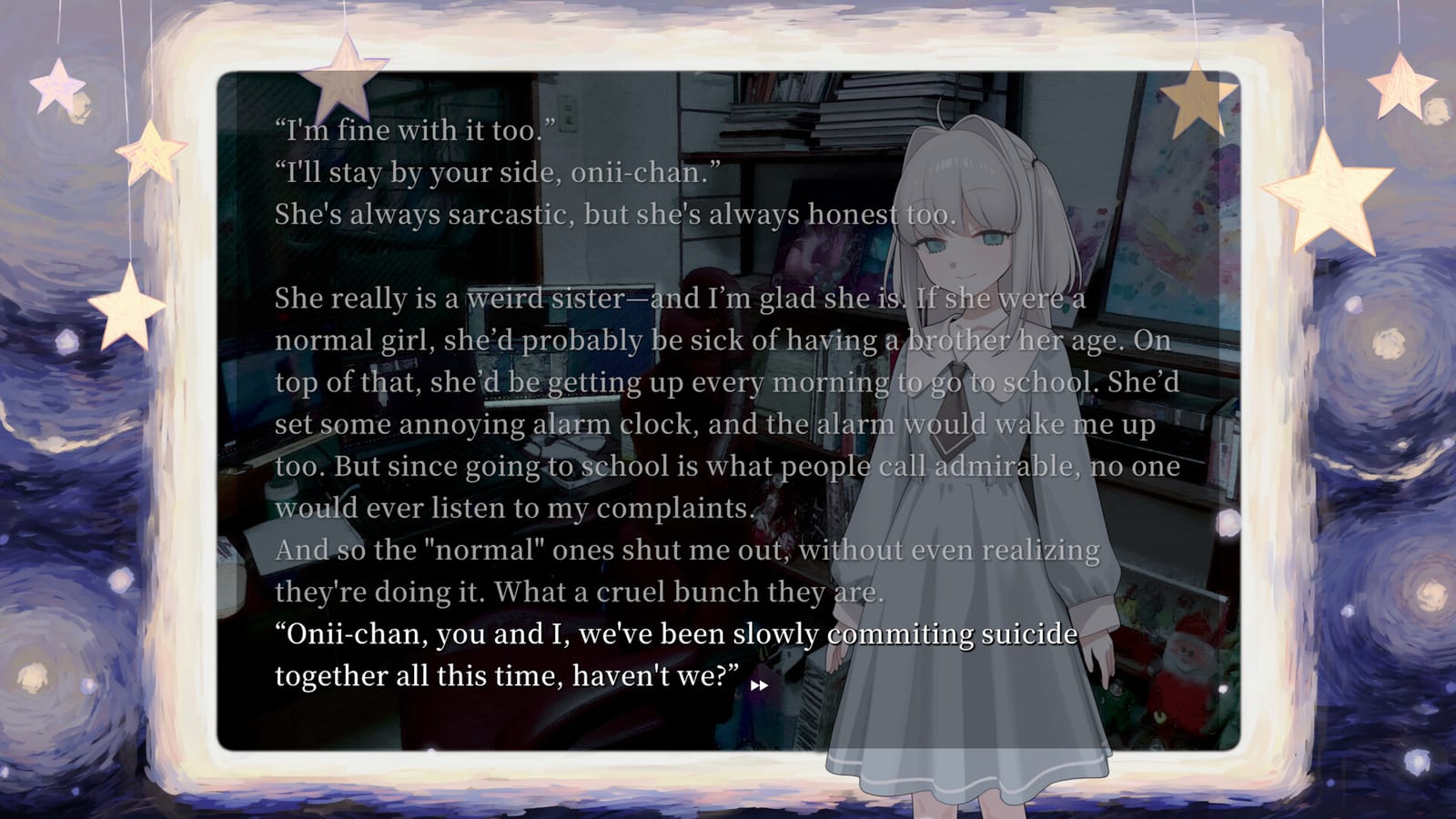
Sister Other Paranoia does not hide its fantasy. The protagonist—an overly sensitive light-novel writer—develops the ability to read minds after drowning in fear and disgust toward other people. Official copy is explicit about where that power can go: when friction with those around him intensifies, he can aim at their deepest insecurities and drive them toward suicide. The game then turns the knife back on the player with questions about happiness, blame, and the future he and his sister might share.
This page explains that premise as a gameplay-facing theme. It does not invent meters, skill trees, or ending charts. For the basic reading loop, see How to Play. For input habits, see Controls. For agency and saves, see Choices. For the category overview, open the Gameplay Hub.
What official materials actually say
Across Steam and Serenity Forge:
- The protagonist is hypersensitive to others’ emotions and becomes able to read thoughts.
- Success as a light-novel newcomer surrounds him with jealousy and petty interiority he cannot unhear.
- Distrust grows; remaining relationships keep hurting him.
- His younger sister is the last comfort, and their bond slides into twisted codependency.
- Mind reading can be used to “take out” people who enrage him by hitting insecurities they never want seen.
- The narration flirts with self-justification—“it is not like you are killing them with your own hands”—then asks whether that is really okay.
That is the mechanical fantasy wrapped in literary framing. There is no public claim of turn-based battles, XP, or collectible thought fragments. The “system” is the ethical and emotional pressure of knowing too much.
Why mind reading changes how you play
Even in a classic visual novel, a signature ability changes your posture as a reader:
You listen for subtext twice
Ordinary dialogue already carries subtext. Mind reading promises a second channel: what people think versus what they say. Expect scenes where social masks crack. Your job is not to theorycraft optimal kills; it is to notice how the game weaponizes intimacy with other minds.
You are invited into a revenge fantasy
Marketing language leans into resentment toward “tasteless, mindless conformists.” That is a character voice, not an instruction manual for real life. Good play includes noticing when the fantasy feels seductive and when it feels sickening. Take breaks. Use the hide-text control from Controls if you need a visual breath without quitting the executable.
The sister relationship is the counterweight
Public materials constantly return to the sibling room as the only comfort left. Mind reading is about the outside world; codependency is about the inside. The tension between those spaces is the real gameplay rhythm—pressure, retreat, worse pressure.
Content warnings specific to this system
Because mind reading is tied to suicide and psychological instability, treat this feature as a content pillar, not flavor text:
- Themes of emotional distress and mental-health crisis are advertised upfront.
- Blood and injury imagery may accompany darker outcomes in illustrated form (described as non-graphic / 16+ style in the mature content blurb).
- Mild sexual or suggestive content can appear in the broader mature tag set.
If you are in a fragile place around self-harm topics, sample carefully via the demo or wait for spoiler-aware reviews after launch. Getting Started keeps a broader warning checklist.
What we do not invent
Pre-release honesty means refusing fake specificity:
- No fabricated “Insecurity Points” economy
- No claimed list of which NPCs can be eliminated
- No invented cooldown timers or detection meters
- No spoiler chart of which uses lock good or bad endings
If the shipping game presents mind reading as selectable prompts, timed decisions, or scripted set pieces, we will document the real structure after players can verify it. Until then, assume narrative integration first.
How to approach mind-reading scenes responsibly
- Read slowly. Full-screen text is there so the rationalizations do not blur past you.
- Separate character ideology from your values. The protagonist’s contempt is a subject of critique as much as a power fantasy.
- Use saves if choices appear. See Choices.
- Do not recreate the rhetoric against real people online. The fiction examines ugliness; it should not become a script for harassment.
- Lean on aftercare. Plan something gentle after heavy chapters.
Connections to denpa and psychological VN history
Players sometimes use “denpa” as shorthand for stories where social noise, paranoia, and distorted perception take over. Sister Other Paranoia’s marketing—ugliness of society, invasive thoughts, retreat into a private myth with a sister—fits that neighborhood without needing a lore lecture. You do not have to complete a denpa reading list to understand the game, but knowing the vibe helps set volume expectations: this is not a cozy slice-of-life clicker.
Compared with Needy Streamer Overload lineage, the shared DNA is emotional extremity and uncomfortable attachment, not identical systems. Mind reading replaces streamer metrics with telepathic intimacy and violence-by-words.
Trailer and demo as research tools
The official trailer (covered in Trailer Breakdown, YouTube ID Jmdkeni-1w0) is the safest public audiovisual summary of tone. Watch it if you need to feel the color palette, sisterly address, and dread before committing money. If a Discord demo build is available, use it to test whether mind-reading framing is something you can sit with for a full price of about $9.99 at launch.
Questions the game wants you to hold
Official text ends on questions rather than answers:
- What is happiness?
- Is indirect killing still killing?
- What future can a codependent pair walk into after choosing contempt for everyone else?
Good “play” means letting those questions stay open instead of rushing a wiki for a canonical moral score. This page will not grade your run.
Related reading paths
- How to Play — session planning around heavy themes
- Controls — UI tools for pacing and screenshots
- Choices — agency without fake ending lists
- Gameplay Hub — all systems pages
- Guides Hub — purchase, demo, trailer, series context
Mind reading is the sharp edge of Sister Other Paranoia. Handle it like one: carefully, with eyes open, and without pretending we already know every cut the full release will make.
Frequently Asked Questions
Quick answers to the most common questions.
Does mind reading work like an RPG skill?
Public materials describe a narrative ability to read thoughts and exploit insecurities, not a published stat system or combat toolkit.
Can the protagonist push people to suicide?
Official copy states that mind reading can be used to strike deep insecurities and drive others to suicide, then asks whether that is truly okay.
Will this page list every mind-reading target?
No. Pre-release pages here avoid invented target lists and ending charts. Spoiler-aware details can arrive after launch if verified.
Where should sensitive players start?
Read the warnings in Getting Started and consider the demo before a full purchase.